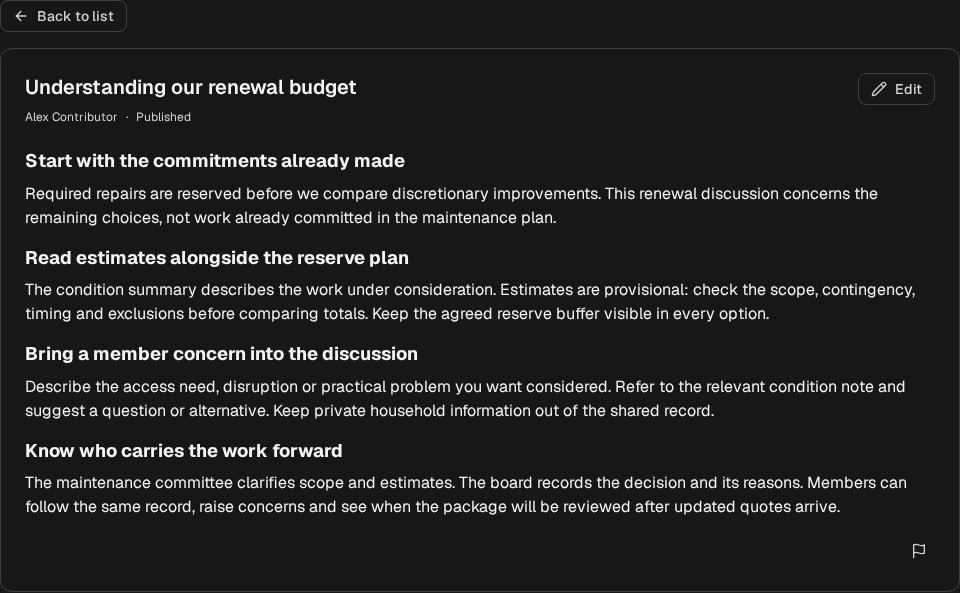
Deliberation · bring the choices into view
Let members examine what each option means.
Compare an entrance-accessibility package, selected energy improvements and a staged combination. Keep disruption, practical benefit, timing and the available budget beside each proposal. A resident can explain an everyday barrier that a cost table misses; another can question the disruption of overlapping work. Gather preferences through a poll, then use the contributions to understand why people favor an option and what changes would address their concerns.
A question to work through
Which improvement package best addresses member needs within the agreed renewal constraints?
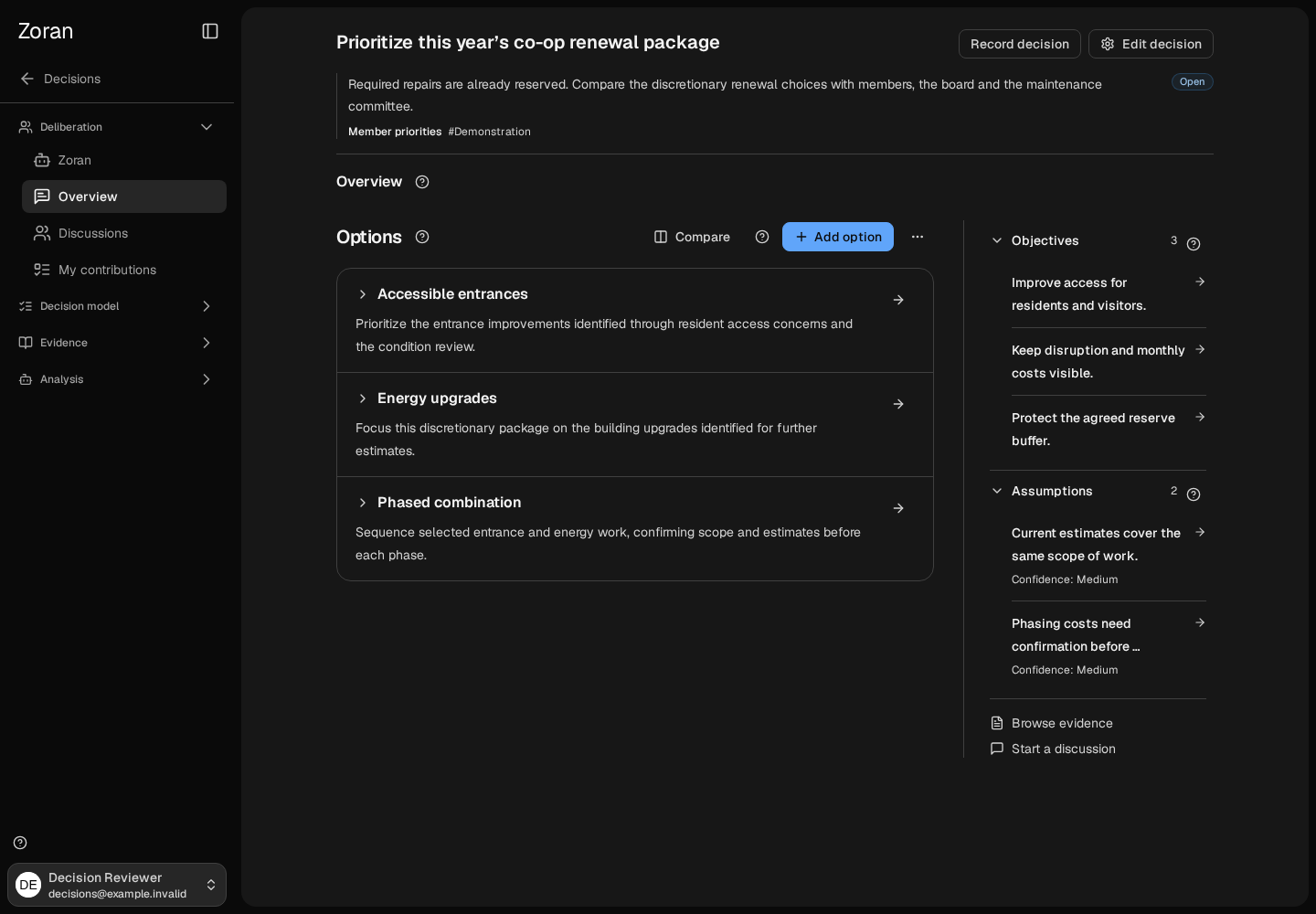
Renewal alternatives presented with their objectives, assumptions and room for member contributions.
Product screenshot · demonstration data