Search & Retrieval
Find prior work across connected sources without forcing teams to move everything into one repository.
Hey Zoran connects your storage, communication, website, inbox, project, and documentation systems, then puts that context to work through grounded assistants, workflow automations, decision intelligence, and structured outputs.
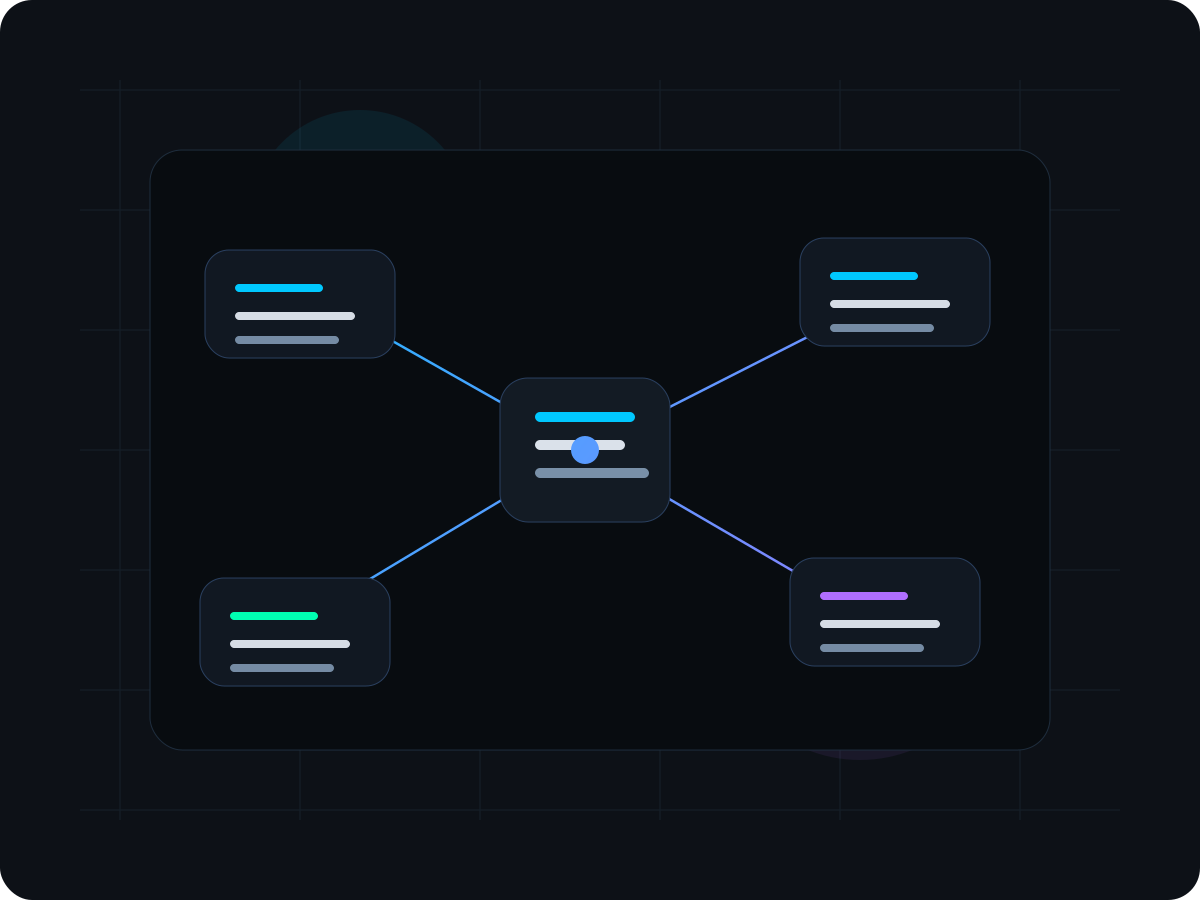
Find prior work across connected sources without forcing teams to move everything into one repository.
Put grounded answers into Slack, support flows, and internal tools while keeping the source trail visible.
Launch public or member-facing assistants through WordPress or custom API integrations where people already ask for help.
Filter inbound email, draft replies, and generate templated content from your own knowledge base.
Keep evidence, branches, accepted outcomes, and review history attached to decision work.
Extend captured decision context into linked planning flows with reusable prompts, gates, and review points.
Bring storage, communications, project records, websites, and documentation into one working layer without flattening them into a generic dump.
The decision workflow keeps evidence, branches, review history, and the accepted outcome visible so teams can see what was proposed, what changed, and what was actually accepted.
Decision #0041
Nov 14, 2024 · Owner: Sarah K. (VP Eng)
Rationale
Chose Vendor B over A due to Canadian data residency requirements and stronger SLA terms.
Sources (4)
Inspectable evidenceUse dense retrieval and semantic search to find the relevant slice of organizational memory, then review the snippets and citations before you rely on it in an assistant, draft, or decision workflow.
Every result should make three things obvious
Legal Review · IT Security Assessment
Canadian data residency and SLA terms drove the final recommendation after legal and security review were compared side by side.
Proposal Archive · Pricing Matrix
Prior response language and pricing assumptions matched 78% of the current scope requirements.
Sprint Notes · QA Summary
Approval bottlenecks and incomplete handoff notes were linked to release slippage across two milestones.
The assistant layer can live in Slack, on your site, or inside custom tools, but the answer still links back to the underlying material so the team can review it in context.
Ground answers in help content, policies, and prior resolutions so support stays aligned to approved material.
For public, member, and logged-in experiences
Bring onboarding guides, SOPs, and internal knowledge into Slack or other chat surfaces so teams learn inside the flow of work.
For enablement, onboarding, and frontline teams
Deploy chat-based help through the WordPress plugin or custom APIs without rebuilding your existing site architecture.
For WordPress sites, portals, and custom products
#delivery-ops
Source-linked review inside Slack
Nadia — 9:14 AM
/zoran find the last approved vendor residency decision for Québec infrastructure data
Hey Zoran
Most relevant artifact: Decision #0041 — Vendor Selection: Data Infrastructure. Final approval cited Canadian data residency, security review findings, and vendor SLA terms.
Use the same organizational knowledge layer to triage email, draft responses, generate templated content, run research, and validate copy before it goes out.
Classify inbound messages against your knowledge base and workflow rules so high-value items reach the right human path faster.
Prepare response drafts or approved sends using customer context, policy constraints, and the right template for the situation.
Generate landing pages, emails, briefs, or support content from reusable templates and prompt recipes instead of starting from a blank page.
Run web research mode and validate drafts against redlines, market positioning, and marketing standards before final review.
Decision intelligence is extending into planning flows so earlier evidence, accepted outcomes, and constraints can stay attached as work moves through multiple decisions and stages.
Linked stages
Carry evidence, rationale, and output state from one decision to the next instead of restarting each phase from zero.
Reusable recipes
Reuse prompts, templates, and validation rules by stage so planning flows stay consistent across teams.
Gates & approvals
Keep review points, ownership, and escalation rules visible as work moves from analysis to action.
Active integration
Multi-decision, multi-stage planning is being integrated with design partners for teams that need more than one-off outputs.
Keep source permissions intact, make deployment and model choices explicit, and treat easier access as a reason for tighter controls, not looser ones.
If a user cannot see a document in the source system, that document should not appear in Hey Zoran search or review results either.
Each organization operates in an isolated environment, and customer content is not used to train shared models.
Data residency, retention, and security requirements are handled as infrastructure decisions instead of vague promises.
Choose the foundation model setup that fits your team. Use your own key, start with OpenAI, Gemini, or Mistral, and switch providers or support self-hosted deployments without rebuilding workflows. Anthropic is coming soon.
Bring the systems that matter, compare how answers and decisions are captured today, and review what changes when grounded assistants and automation are easier to deploy.