Context matters
The value of an output depends on the knowledge, history, and constraints around it.
They run on accumulated context, ongoing conversations, prior decisions, source material, and work that needs to stay usable beyond a single interaction.
Hey Zoran is designed with that in mind. It gives teams a way to work with AI that is connected to their own knowledge and steady enough to support drafting, research, review, and decision-making without turning everything into disposable output.
The interesting part is not getting a model to produce something plausible on demand. The interesting part is making the result usable in the context where people actually work. That means knowledge, history, constraints, collaboration, and the judgment needed to decide what is worth keeping.
We built Hey Zoran around that environment. It supports simple day-to-day use, but it is also designed to carry context forward, connect work to source material, and keep useful output from disappearing the moment an interaction ends.
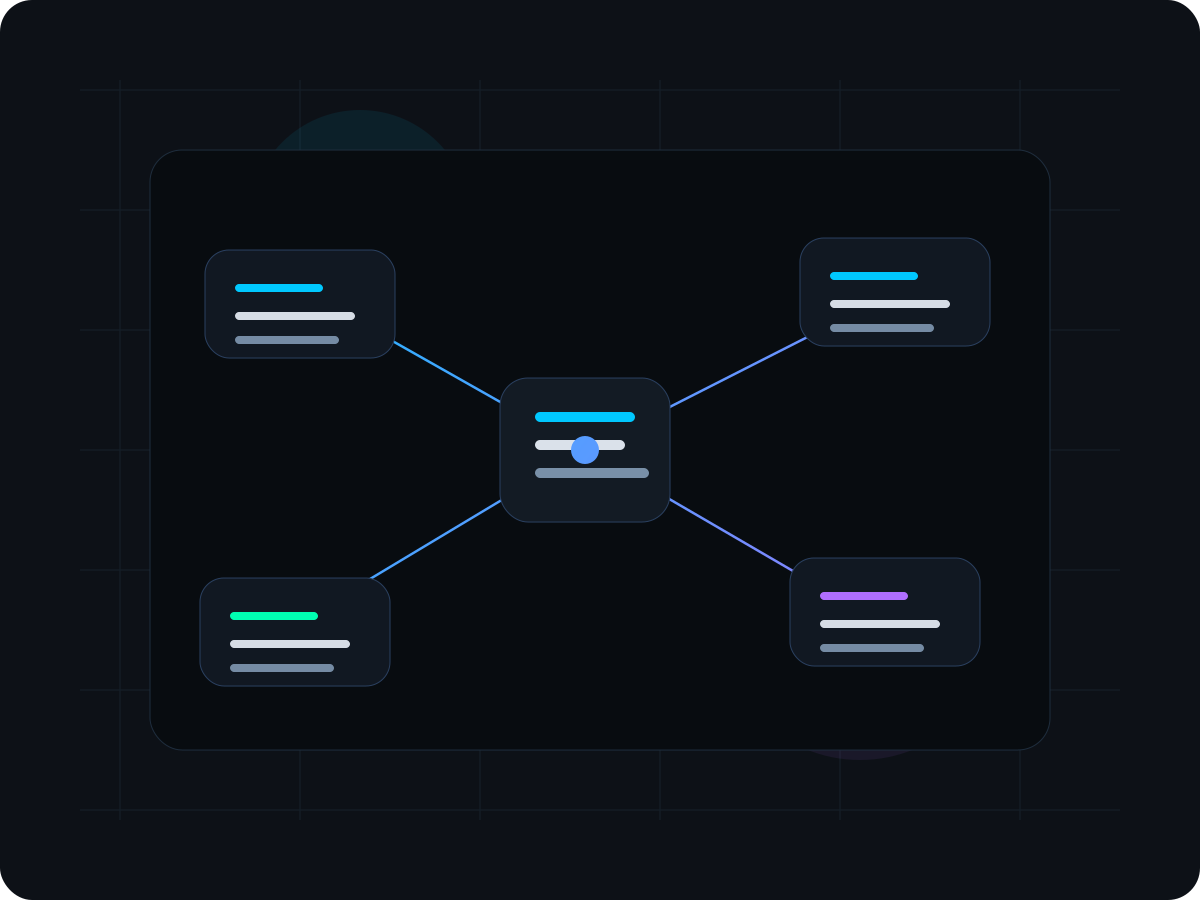
Organizations already have knowledge. They already have documents, conversations, decisions, and material that matters. What is often missing is a system that can work with that context directly, support useful output, and preserve the result in a form people can return to later.
That is the direction behind Hey Zoran. Not AI as a one-off interaction, but AI as part of a working environment where context stays attached to the work.
That can mean asking questions against internal knowledge, drafting with the right context already in place, exploring source material, running research, validating content, or supporting decisions that need more than a quick answer.
It works best when the goal is not only speed, but usefulness: output that can be reviewed, reused, and carried forward.
The value of an output depends on the knowledge, history, and constraints around it.
What matters is whether the result helps someone move work forward.
Outputs should be easy to examine, refine, and stand behind.
Useful context and results should stay available for the next step instead of resetting each time.
We like meeting people who care about trustworthy systems, careful product language, and tools that help teams recover context before they repeat mistakes.