Zoran

Community networks and regional initiatives

Put your community’s knowledge to work.

Local progress depends on people who know different parts of the picture. Give your network an AI workspace to connect that knowledge, debate priorities and gather support for shared initiatives.

Start with a focused pilot for your organization.

A regional initiative, worked through together

Which food-hub service should the region build first?

A local coalition wants to connect small producers with more reliable routes to market and community food programs. The ambition is shared; the starting point is disputed. Some partners need storage, others need deliveries, and others want processing space. This demonstration follows the work of choosing a first service that partners can sustain.

Deliberation · compare the starting points

Make the tradeoffs part of the proposal.

In the decision workspace, compare shared chilled storage with weekly aggregation, a delivery-only pilot and a shared processing kitchen. Use the same questions for each: who benefits, what must be ready, who operates it and what ongoing costs need support? Partners add evidence and concerns beside the options. A producer’s seasonal needs or a food program’s collection hours can change the shape of a proposal before the group chooses.

A question to work through

Which first service addresses a documented need and has credible operating support?
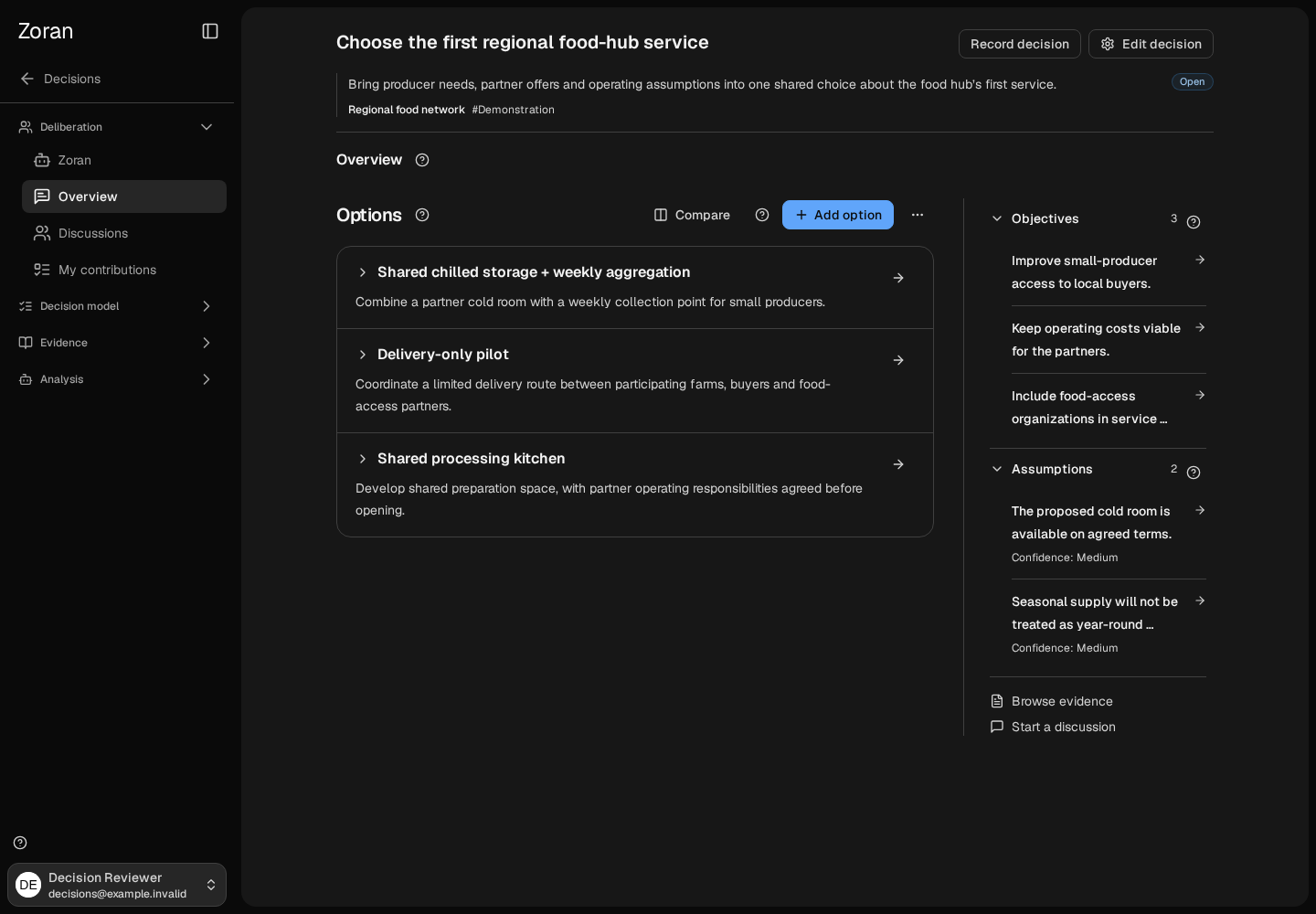
Zoran decision workspace comparing three regional food-hub services with demonstration objectives, assumptions and proposals.

Three starting points, with the objectives and assumptions available to the people weighing them.

Product screenshot · demonstration data
Bring the people who know different parts of the system

Producers explain seasonal volumes. Food-access organizations describe demand and collection needs. A logistics partner tests delivery assumptions. Municipal and community-development staff contribute premises, funding and planning context. A coordinator keeps the shared question moving.

Start with evidence the partners can examine

Producer consultation notes, a feasibility summary, available-site information, indicative operating costs and partner resource offers. Keep the date and status of each document visible so an early estimate does not become an assumed commitment.

Knowledge chat · question the evidence

Find out what the documents support—and what they leave open.

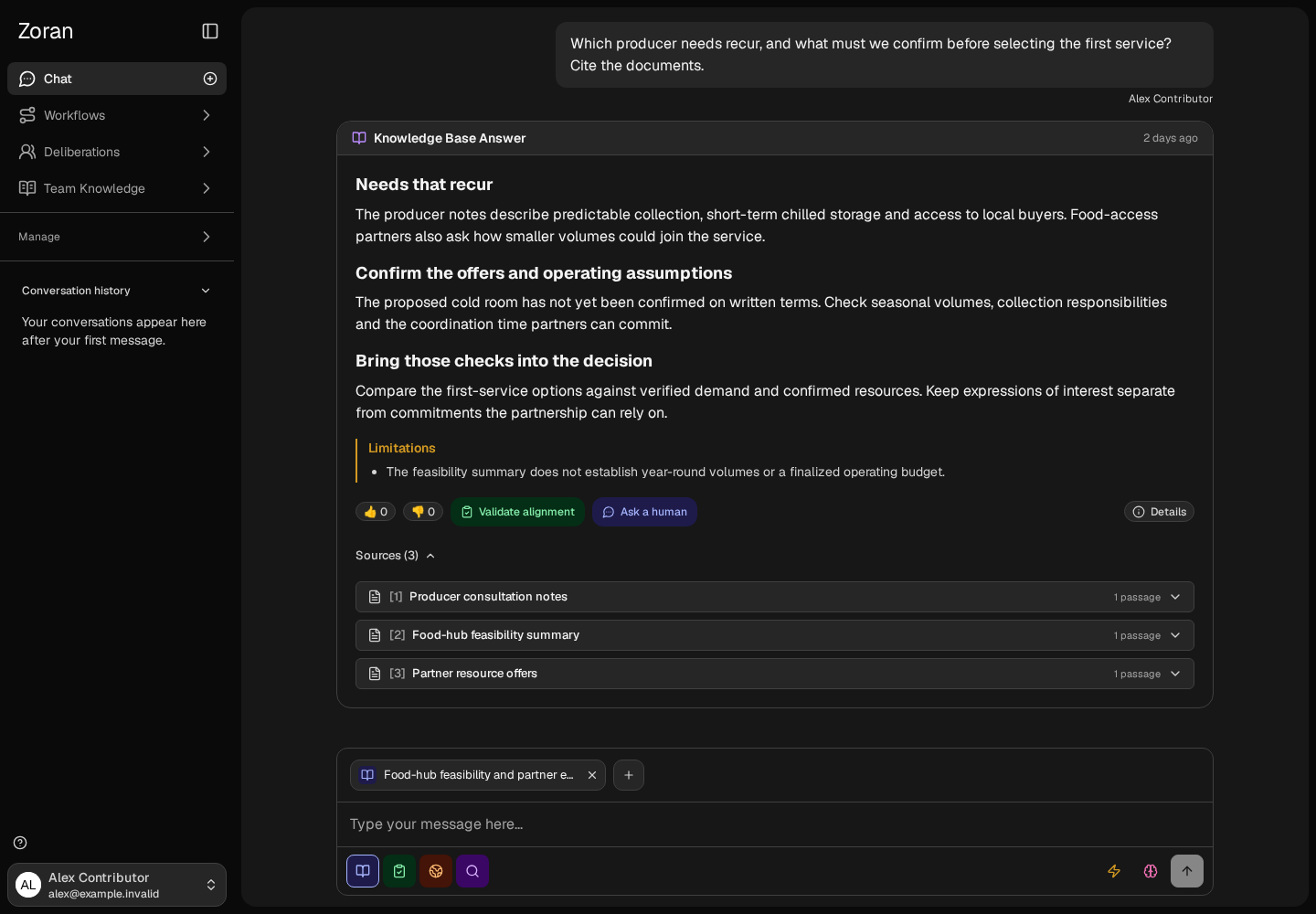
Ask AI to bring recurring needs and unresolved constraints out of the selected reference material. Follow the citations into the consultation and feasibility notes, then take those findings back to the discussion. A poll sent to prospective users can test which services they would use and when. Treat those responses as input from the people reached, and keep unanswered questions available for further investigation.

A question to work through

Which producer needs recur, and what must we confirm before selecting the first service? Cite the documents.

Zoran knowledge chat examining food-hub consultation and feasibility documents with a demonstration sourced response.

A question across shared references, with sources the partners can inspect.

Product screenshot · demonstration data

Record the commitments and plan the next review.

Record money and time pledges alongside the proposal; distinguish offers from confirmed funding and scheduled work. Retain the decision, the assumptions and the questions still open. After the first operating period, bring actual demand, costs and partner experience back into the record so the group can decide what to change.

Built for the work you share

What a useful pilot should demonstrate

  1. Every participating partner can find the evidence behind a major assumption and identify what still needs confirmation.

  2. The group can explain its preferred starting point, the tradeoffs and which resource offers remain conditional.

  3. A partner joining later can understand the choice and contribute to its review without reconstructing the original meetings.

Start where partners need each other

A community association, regional development network or local coalition can begin with one initiative that needs knowledge and support from several organizations.

Agree who participates, who decides and what you want to learn from the pilot.

Put it to work

What could your network accomplish together?

Bring the initiative that is too important to leave scattered across inboxes and meeting notes.

Choose a real body of knowledge, a live decision or a recurring analysis. Together, we will define who takes part, the access they need and what a useful result looks like.

Discounted pilots are available for nonprofits, small community groups and governments. Qualifying nonprofits and small community groups may be eligible for extended discounts; terms are agreed together.

Verification

Complete the security check before sending your inquiry.