The difference between RAG and organizational memory
Retrieval-augmented generation is useful for bringing relevant context into a prompt. Organizational memory goes further: it preserves continuity over time, keeps permissions intact, and makes the reasoning path inspectable when someone needs to review the result later.
By Hey Zoran Editorial Team
Platform architecture
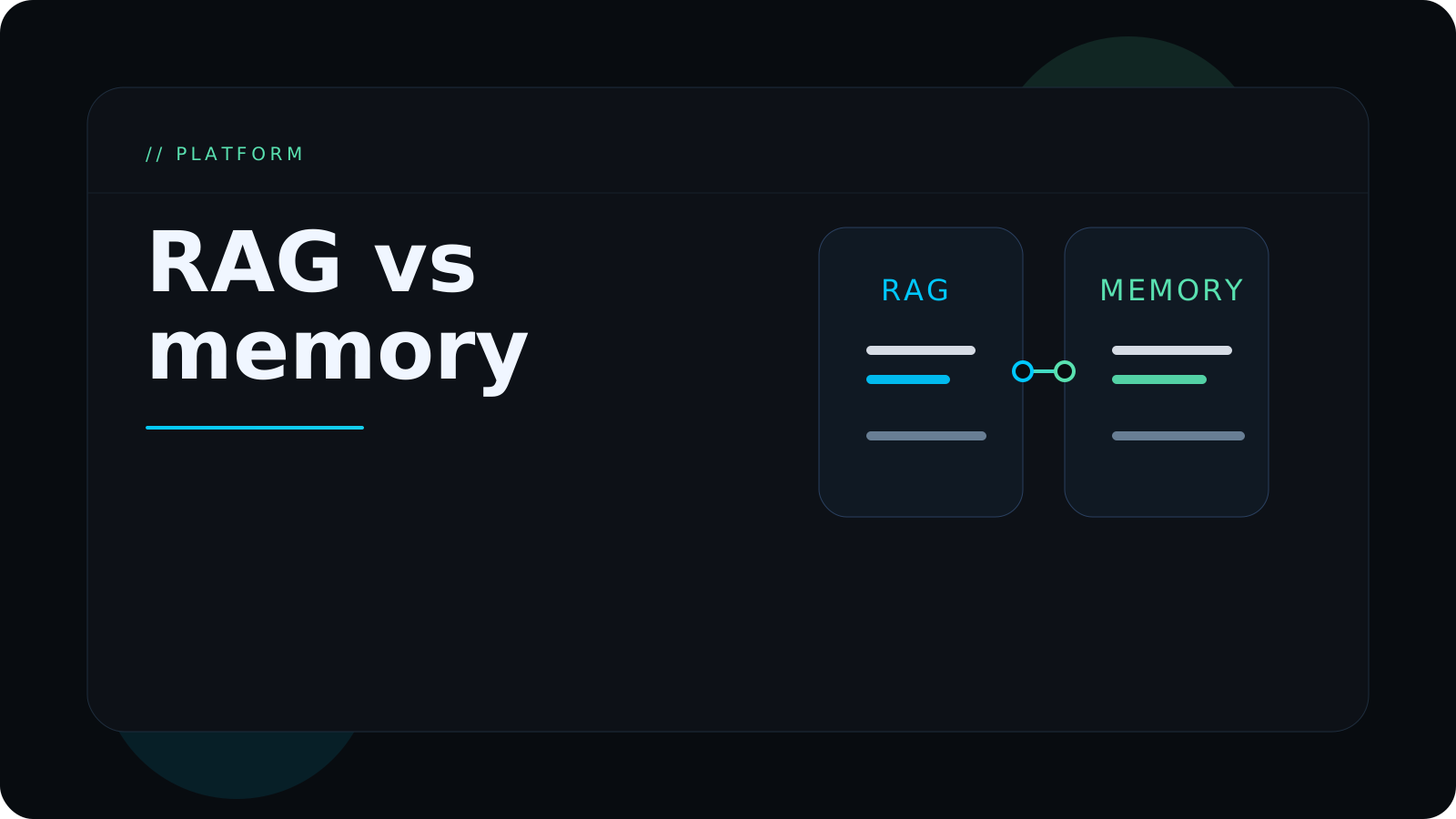
RAG has become a helpful shorthand for “use the right source material when answering a question.” That is valuable. A system that can retrieve the most relevant documents, thread excerpts, or tickets at query time will usually outperform one that tries to answer from model knowledge alone.
But retrieval is not the same thing as memory. Organizational memory requires continuity. It needs to show what information informed the result, what changed since the last time the issue came up, who had access, and how a conclusion connects to the workflow around it. Without that continuity, you have a good moment of retrieval but not a durable operating record.
RAG is about getting the right context into the current answer
At its best, RAG solves a focused problem: before generating an answer, fetch relevant material from the organization’s own sources. That helps the system stay grounded in current documents instead of relying on incomplete or stale assumptions.
If the question is “What does our latest policy say about this?” or “Where is the relevant project brief?”, retrieval does a lot of the heavy lifting. It improves recall and makes the first answer substantially more useful.
Memory carries state forward after the answer is delivered
Organizations do not only need answers. They need continuity. That means the system has to preserve enough structure that another person can pick the work back up later, understand what changed, and make the next decision without starting over.
- Stable records for decisions, outputs, and source sets.
- Permission-aware access so the same result is not shown to the wrong audience.
- Change history that makes it clear when the answer should be re-evaluated.
- Links between outcomes, approvals, constraints, and the evidence behind them.
Permissions and provenance are part of the product, not post-processing
A retrieval layer can surface relevant text, but organizational memory also needs to honor who is allowed to see what. The same question asked by legal, operations, and a contractor may require different source visibility and different output shape. Memory that ignores permissions becomes hard to trust in real operating environments.
Provenance matters for the same reason. A reviewer should be able to see where a conclusion came from, whether the source was current, and whether a human approved or edited the result. That visibility is what turns an answer into a usable operational artifact.
A practical stack uses retrieval in service of continuity
The best implementations do not choose between RAG and memory. They combine them. Retrieval finds the right context quickly. Structured records preserve the outcome, rationale, and approval state. Workflows connect the answer to the real process it supports, whether that is an RFP response, a policy review, or a project handoff.
Used together, retrieval stops being a one-off feature and becomes part of a system that helps teams remember, review, and reuse what they already know.
Turn the insight into a working system.
Hey Zoran helps teams connect their existing sources, preserve decision context, and review outputs with the evidence still attached.
More from the blog